

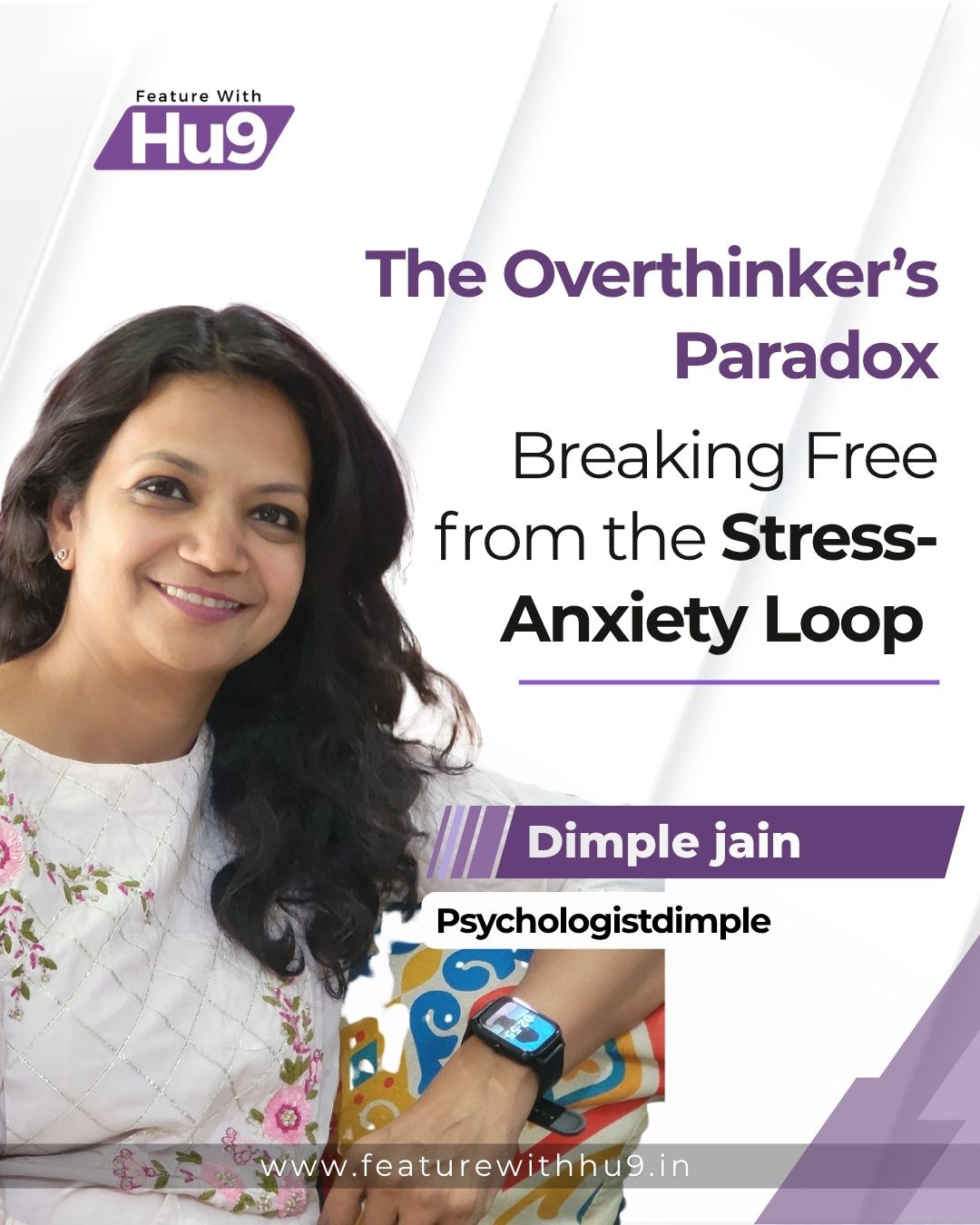
By Dimple, Counseling Psychologist (Psychologistdimple)
If you live with constant mental chatter, you know the feeling: the endless replaying of past conversations, the exhausting prediction of future disasters. This is not just a ‘quirk’; it’s the Overthinker’s Paradox: the act of trying to think your way out of a problem that only creates more anxiety and stress.
In my 4,000+ counselling sessions with clients ranging from 7 to 87, this overthinking-anxiety-stress loop is one of the most common engines driving distress, whether it manifests as depression, difficulty with self-esteem, or debilitating procrastination.
The good news is that this loop can be interrupted. And because I utilize a client-centered and eclectic approach, I don’t use a single template to do it. The break-through plan is always tailored to best support everyone.
Why Overthinking is More Than Just “Worrying”
Overthinking is the excessive, circular, and often negative focus on thoughts. It drains mental energy and paralyzes action. It is the core mechanism that connects many of the issues I work with:
- Anxiety: Overthinking is the hyper-focus on perceived future threats.
- Depression: Overthinking often involves rumination—the excessive focus on past failings or negative feelings.
- Procrastination: This is often the consequence of overthinking, where the sheer volume of “what ifs” related to a task triggers such immense performance anxiety that starting feels impossible.
- Low Self-Esteem & Confidence: The internal monologue of an overthinker is almost always relentlessly critical, chipping away at self-worth.
The Eclectic, 3-Stage Strategy to Interrupt the Loop
My training in 12 different psychotherapies allows me to pull the right tool at the right time. We work together to attack the problem from three necessary angles:
Stage 1: The Cognitive Challenge (The “What” and “Why”)
This is where we use structured, action-oriented therapies like Cognitive Behavioural Therapy (CBT).
- The Focus: We identify the specific, distorted thoughts (“I must be perfect,” “If I fail, I’m worthless”) that fuel the overthinking. We treat these thoughts as hypotheses, not facts, and test their validity.
The Tailoring: If your overthinking is fueled by catastrophic predictions (anxiety), we use targeted exposure and reality-testing. If it’s driven by black-and-white perfectionism (OCD-like tendencies), we employ techniques to tolerate uncertainty.
Stage 2: The Emotional Grounding (The “Here and Now”)
Overthinking is rarely about the present. It pulls you into a regrettable past or a fearful future. Humanistic and Mindfulness-Based therapies bring you back to anchor in the moment.
- The Focus: We practice acceptance and non-judgment. The goal isn’t to stop the thought, but to stop engaging with it. We learn to observe the thought without attaching judgment or action to it, lessening its power over your body’s stress response.
- The Global Perspective: This stage is particularly vital for my clients in high-pressure roles, including those I work with as a global therapist with Spring Health, based in New York, and in my independent online practice, where the pressure to perform globally exacerbates daily stress.
Stage 3: The Root Exploration (The “You”)
Overthinking is often a coping mechanism that developed early in life to maintain safety or control. To create lasting change, we explore the underlying need being met.
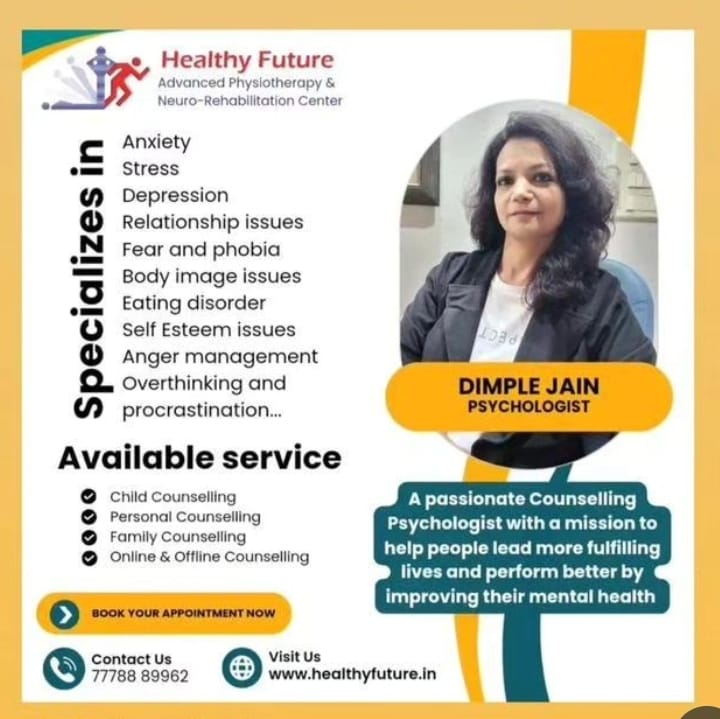
- The Focus: We examine how early patterns in relationship issues, family dynamics, or formative experiences (the kind I’ve observed in settings like Teach for India or in complex cases at the Healthy Future Neuro Rehab Center) may have created the deep-seated need to “figure everything out” before acting. Addressing the root cause of low confidence and self-esteem makes the strategies from Stages 1 and 2 stick permanently.
- The Approach: This is the core of the client-centered model—it ensures that the pace and depth of the work align with your personal history and emotional capacity

Moving Beyond the Paradox
The Overthinker’s Paradox is not a life sentence. It is a set of thought patterns that can be unlearned. By using a flexible, eclectic approach informed by years of diverse practice, we can select the most effective tools from my full range of psychotherapies to create a plan that truly works for you.
You are not your thoughts. You are the one who observes them.



I needed to post you one tiny note just to give thanks again for those remarkable secrets you've provided in this case. It is really particularly generous of you to deliver extensively all that a number of us would have made available for an e-book to make some money for themselves, specifically given that you could possibly have done it if you ever considered necessary. Those things likewise worked to be the fantastic way to comprehend most people have the same dream like my own to see lots more with reference to this issue. I'm sure there are several more pleasant times ahead for many who take a look at your blog post.
Appreciate it for this marvelous post, I am glad I detected this website on yahoo.