
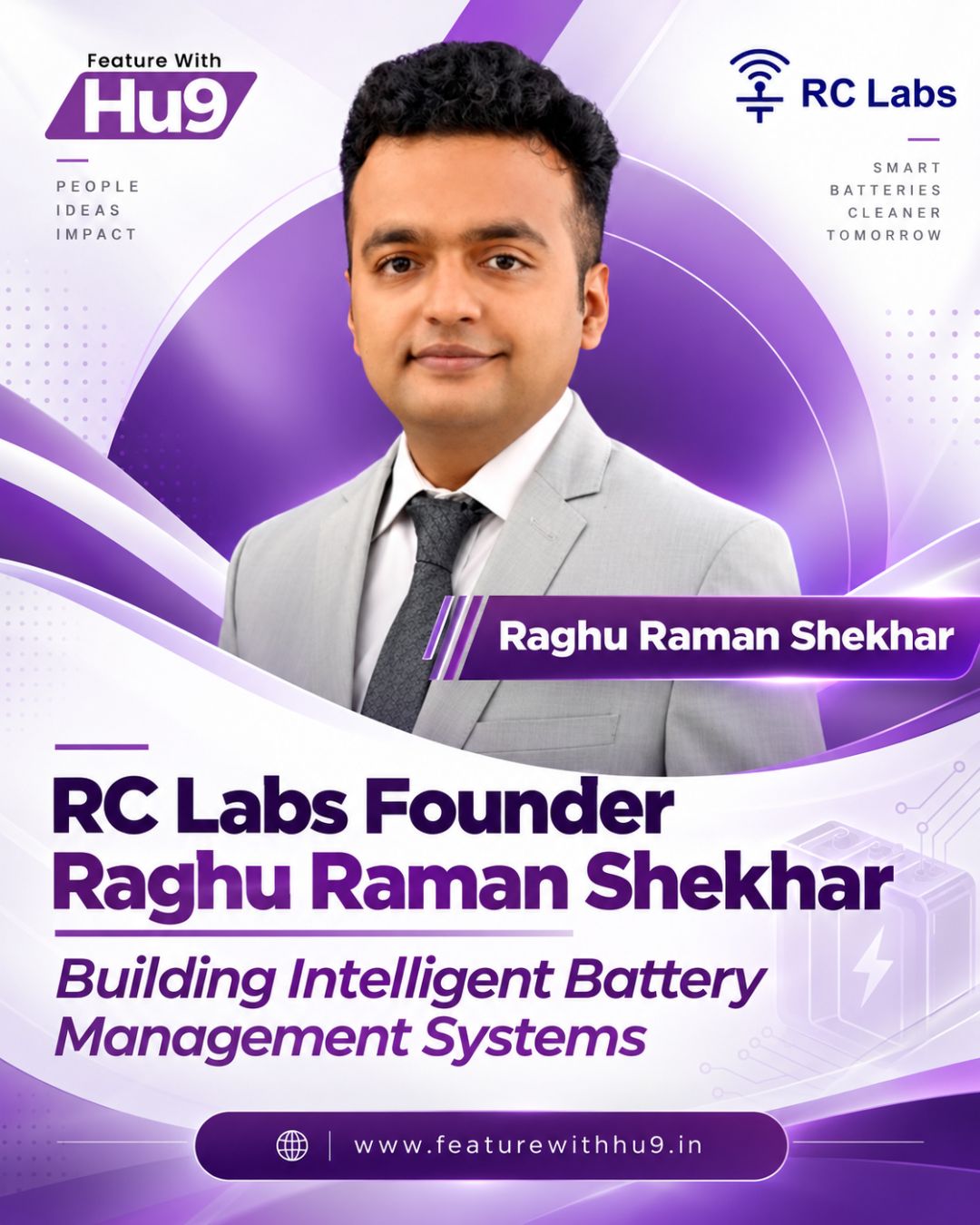
How RC Labs Founder Raghu Raman Shekhar Is Building Intelligent Battery Management Systems
The Bangalore-based energy company is developing a modular, chemistry-agnostic and scalable BMS platform for electric vehicles, energy storage and other battery-powered applications.


As electric vehicles, energy storage systems and other battery-powered products evolve, the Battery Management System, or BMS, has become central to how safely and efficiently these systems operate. Yet businesses often face a difficult choice: adopt an imported, off-the-shelf solution that may not suit their exact requirements, or invest substantial engineering resources in developing a customised BMS from scratch.
Bangalore-based RC Labs was founded by Raghu Raman Shekhar to bridge this gap. The energy company designs and manufactures intelligent Battery Management Systems through a modular, customisable and scalable platform. By combining hardware, software and data intelligence, RC Labs enables companies to develop battery systems suited to different chemistries, voltage ranges, operating conditions and applications.
A Problem Identified Through Research
The idea for RC Labs emerged during Shekhar’s PhD research, when he was working extensively with batteries and power electronics. Across different applications, he observed that the BMS was a critical component, but was not always properly integrated with the battery pack and the wider system.
Such gaps in integration could lead to inaccurate battery estimates, underutilisation of available capacity and reduced performance. In some instances, they could also create serious safety risks. These observations pointed to a need for a BMS that could combine reliability and intelligence with the flexibility required to adapt to different battery chemistries and use cases.
That insight became the foundation of RC Labs: an intelligent and flexible BMS platform intended to make battery systems safer, more efficient and easier to develop.
Bridging the Build-versus-Buy Gap
Many companies rely on imported, off-the-shelf BMS products because they are readily available and can appear economical at the outset. However, these systems may not have been designed for a customer’s specific battery chemistry, operating environment or application. This can create integration difficulties, constrain battery performance and potentially affect safety and reliability.
Building a BMS internally presents a different set of hurdles. It requires specialised engineering expertise, research and development investment, and considerable development time. RC Labs positions its platform between these two options. Its modular architecture can be configured and customised for different applications, helping companies integrate an appropriate BMS without starting the entire development process from the ground up.
A Modular and Chemistry-Agnostic Architecture
RC Labs differentiates itself through the underlying architecture of its BMS platform. Rather than developing a completely new system for every battery pack or application, the company has built a modular, chemistry-agnostic and scalable platform that can be adapted to varying requirements.
The same core architecture can support smaller battery-powered systems, electric vehicles and stationary energy storage. It can also work across different battery chemistries and voltage ranges. This model is designed to reduce the engineering effort, development time and cost associated with launching new battery systems, while supporting improvements in safety, reliability and performance.
In this approach, the BMS is not treated merely as a standalone electronic component. It becomes a flexible battery-management platform capable of evolving alongside the customer’s product and application requirements.
Changing How Customers Evaluate a BMS
One of RC Labs’ biggest challenges has been reaching customers who understand the broader role of battery management. Low-cost imported BMS solutions are widely available, making initial price a prominent factor in purchasing decisions. However, a BMS has a direct role in the safety, performance, reliability and lifespan of the complete battery system.
The limitations of a low-cost, off-the-shelf product can become clearer when a company needs deeper system integration, dependable battery data, application-specific customisation or support for a new use case. RC Labs must therefore engage both technical and business decision-makers and communicate the long-term value of investing in a high-quality, customisable platform.
For the company, this is not only a product challenge but also a market-education challenge: shifting the conversation from the upfront cost of a component to the performance and dependability of the complete battery system.
Patented Technology and Cross-Vertical Work
RC Labs has patented its Modular Battery Management System technology. The company has also completed successful projects across multiple verticals, demonstrating the adaptability of its platform across different battery-powered applications.
Another milestone is its recognition as a Top Elevate 2025 winner. Together, these achievements reflect the company’s focus on developing a common technological foundation that can be configured for diverse requirements rather than limiting itself to a single battery chemistry, voltage range or end-use segment.
This cross-application approach aligns with RC Labs’ central proposition: customers should be able to access tailored battery management without bearing the full effort and time involved in designing an entirely new BMS for each product.
From BMS Manufacturing to Intelligent Energy Solutions
RC Labs’ next phase will build on its battery-management expertise while moving further into intelligent energy solutions. The company plans to develop customised battery and energy-storage solutions for applications where businesses require reliable, distributed and flexible power.
Its BMS will remain the intelligence at the centre of these solutions. RC Labs intends to combine battery hardware, controls, connectivity and data into integrated energy products, extending its role beyond an individual component within the battery pack.
Over time, the company aims to evolve from a BMS manufacturer into a broader battery intelligence and energy solutions business serving multiple industries. This direction retains the modular philosophy on which RC Labs was founded while applying it to a wider set of energy requirements.
For Raghu Raman Shekhar, RC Labs is rooted in a problem first encountered through hands-on research: battery systems cannot deliver their intended capacity, performance and safety unless their management systems are properly integrated. By offering a configurable alternative to both generic imported products and resource-intensive in-house development, the company is seeking to make sophisticated battery management more accessible across applications.
As RC Labs expands towards integrated battery and energy-storage solutions, its patented modular BMS platform will continue to provide the core intelligence—connecting hardware, software, controls and data to help businesses build safer, more reliable and efficient battery-powered products.