
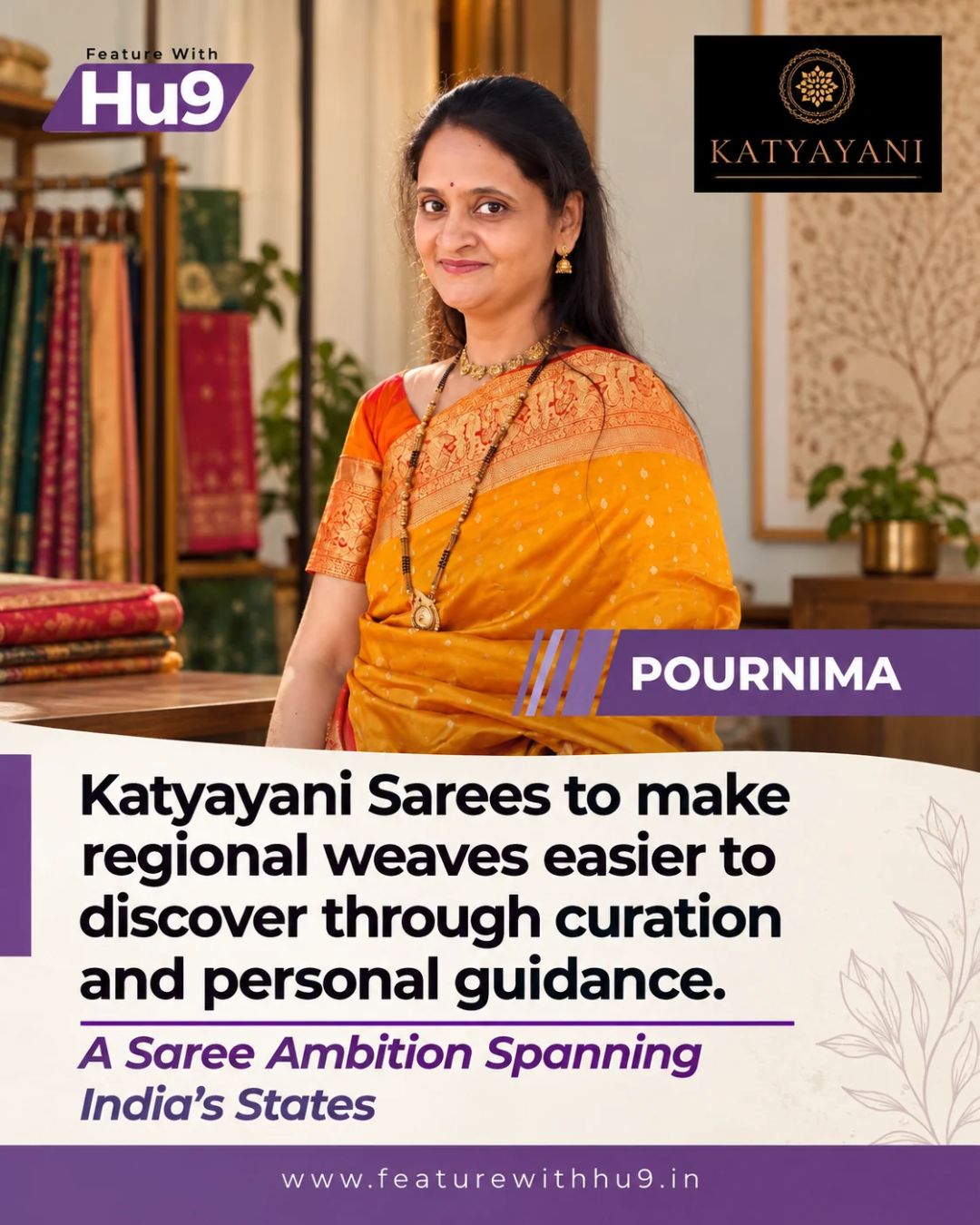
One Pune Boutique, a Saree Ambition Spanning India’s States
Pournima Suryawanshi wants Katyayani Sarees to make regional weaves easier to discover through curation and personal guidance.
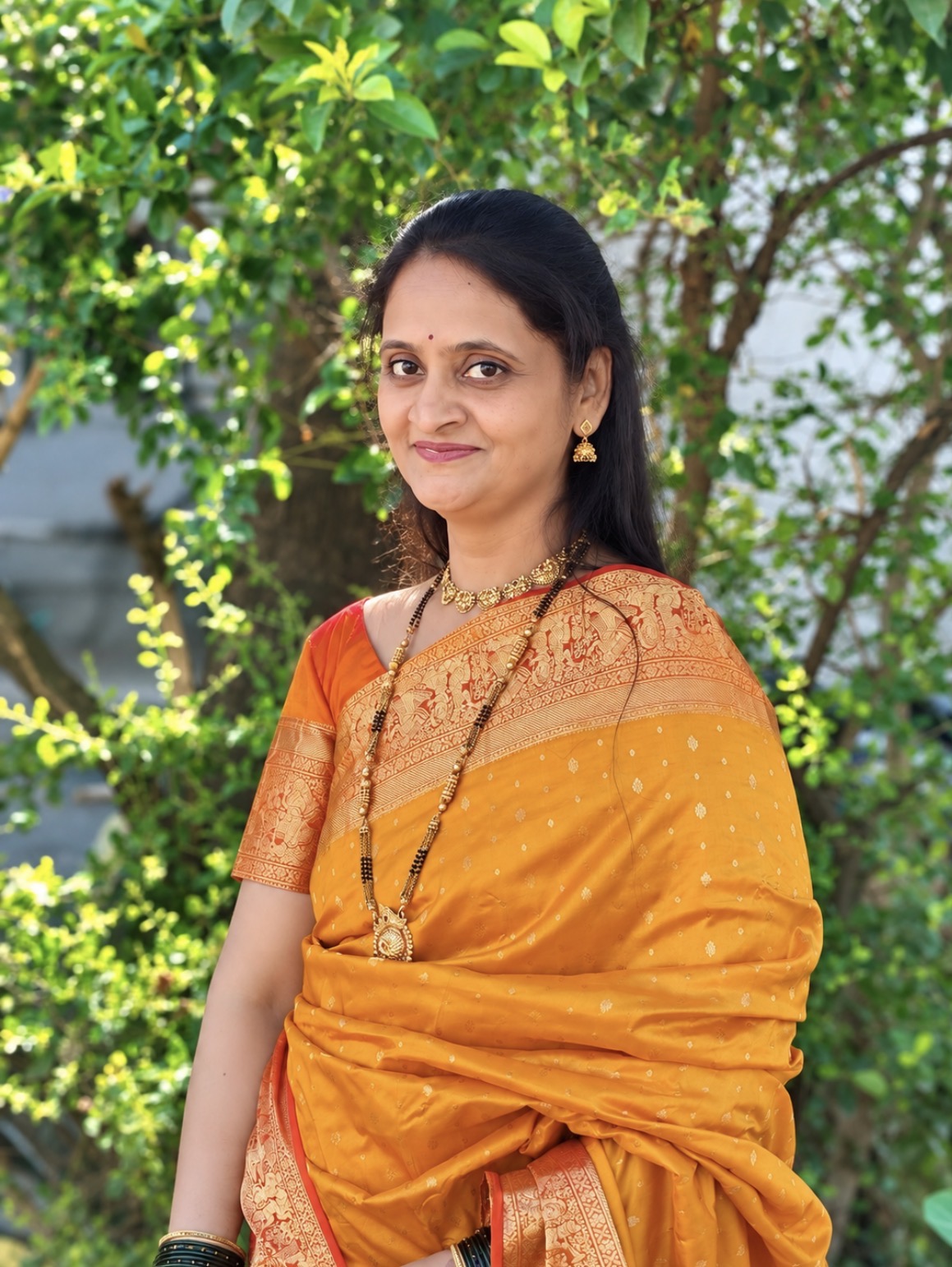

This founder feature was prepared by Feature With Hu9 using information shared by the founder or business and editorially structured for publication.
For Pournima Suryawanshi, a saree is not simply clothing for a wedding or festival. It can carry a regional tradition, suit a working day and still leave room for the wearer’s individual style. That perspective shaped Katyayani Sarees, the boutique she founded in Pune.
The idea began with Pournima’s love for traditional wear and an ambition to make sarees from different Indian states available to more women. Her business is built around a practical customer need: finding sarees that bring together tradition, elegance, quality and affordability is not always straightforward. Katyayani seeks to address that difficulty through carefully selected collections and personal assistance rather than leaving customers to navigate the choice entirely on their own.
Its range includes cotton sarees, pure silk Paithanis, jute silk Paithanis, semi-silk Ikat sarees and festive designs. Together, these categories reflect the central idea behind the venture—traditional Indian craftsmanship can remain relevant across occasions, from office days to weddings and celebrations.
A national idea rooted in a love for traditional wear
Pournima’s starting point was personal: an affection for India’s traditional clothing. From that came a wider aspiration—to bring sarees associated with different states together so that customers could access more of the country’s textile variety.
Katyayani Sarees is still working towards that broad vision. Its present selection brings together distinct materials and styles, including Paithani and Ikat, alongside cotton and festive collections. The focus is not on treating tradition as one uniform category, but on presenting customers with choices suited to different preferences and occasions.
This makes curation central to the business. Each collection is selected with beauty, variety and value in mind, according to the founder. The approach is intended for women who want to celebrate culture without giving up their own sense of style.
The difficult balance behind a saree purchase
The customer problem identified by Katyayani is a familiar but layered one. A buyer may want a saree that feels traditional yet contemporary, elegant yet affordable, and appropriate for a particular setting. Quality adds another consideration. Bringing all these requirements together can make the purchase more demanding than simply choosing a colour or design.
The occasion also changes the brief. An office saree may need to meet different expectations from one selected for a wedding, festival or special celebration. Katyayani therefore organises its proposition around versatility, offering categories that can serve both everyday and occasion-led needs.
Rather than claiming that one style can work for everyone, the venture places individuality at the centre of the selection process. The aim is to help each customer identify a saree aligned with her preferences and the moment for which she is buying it.
Why personal guidance remains part of the model
Katyayani combines its product selection with individual attention. Customers can receive guidance while choosing a saree, particularly in relation to their preferences and the occasion. This personal element is one of the distinctions Pournima wants the business to retain.
That matters in a category where texture, fabric, drape, colour and context can all influence a decision. Katyayani’s role is not only to place options before the customer, but also to make the process more considered and enjoyable.
The company reaches customers through three routes: its Pune boutique, online shopping and exhibitions. These channels allow it to offer convenience while continuing to create opportunities for direct engagement. Exhibitions bring the collection closer to buyers who may want to explore it in person, while online access supports customers seeking a more convenient shopping route.
From pure silk Paithanis to office-day cottons
The breadth of the collection reflects the variety of roles a saree can play in a woman’s wardrobe. Pure silk Paithanis and festive designs cater to weddings and celebrations, while cotton sarees can fit everyday and office use. Jute silk Paithanis and semi-silk Ikat add further options across fabrics and aesthetics.
This occasion-based thinking gives Katyayani a clear editorial lens for its curation. The business is not limited to ceremonial wear, nor does it position the saree solely as an everyday garment. Instead, it treats the category as one that can move across different parts of a customer’s life.
The common thread is an attempt to bring heritage and contemporary preferences together. For Pournima, tradition does not have to remain fixed in a single context; it can be selected and worn in a way that reflects the individual.
The milestone of a boutique in Pune
Establishing her own boutique, Katyayani, in Pune is the founder’s stated achievement so far. It gives the venture a physical identity in the city and a setting for the personalised shopping experience that forms part of its proposition.
The boutique also turns Pournima’s interest in traditional wear into a focused fashion business. Its name now sits across a collection, a customer experience and a longer-term brand ambition. While the venture also operates online and through exhibitions, the Pune boutique remains a tangible milestone in its development.
Recognition will depend on reaching new customers
Pournima is direct about the challenges ahead: gaining new customers and scaling the business. These priorities are closely connected to her future goal of making Katyayani a well-known brand recognised for elegant, carefully selected saree collections.
For a business grounded in curation and personal attention, growth will involve extending its reach while preserving the qualities it considers distinctive. Its combination of a boutique, online shopping and exhibitions provides multiple ways to meet customers, but building recognition will require Katyayani to make its identity clear across each of them.
That identity currently rests on a defined set of ideas: regional variety, careful selection, occasion-led choice and individual guidance. The task ahead is to turn those ideas into a name that more customers recognise and remember.
Katyayani Sarees began with a wide cultural ambition: to make the sarees of India’s states more accessible to women who value both heritage and personal style. Its present journey is more grounded—building from Pune, finding new customers and learning how to scale a curation-led business. The opportunity for Pournima lies in keeping the original idea visible as the brand grows: not merely offering more sarees, but helping each customer find meaning and relevance within India’s varied traditions.