
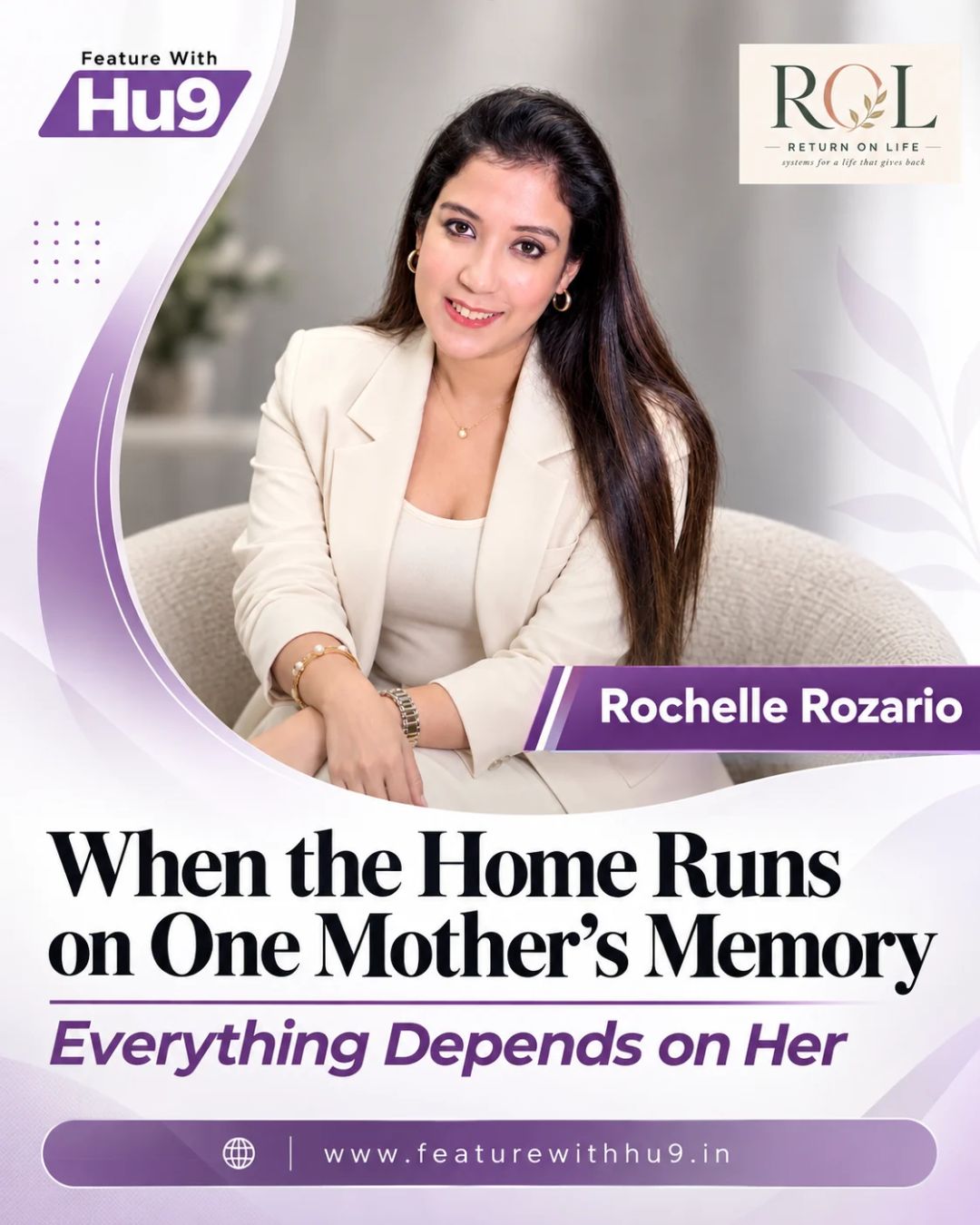
When the Home Runs on One Mother’s Memory, Everything Depends on Her
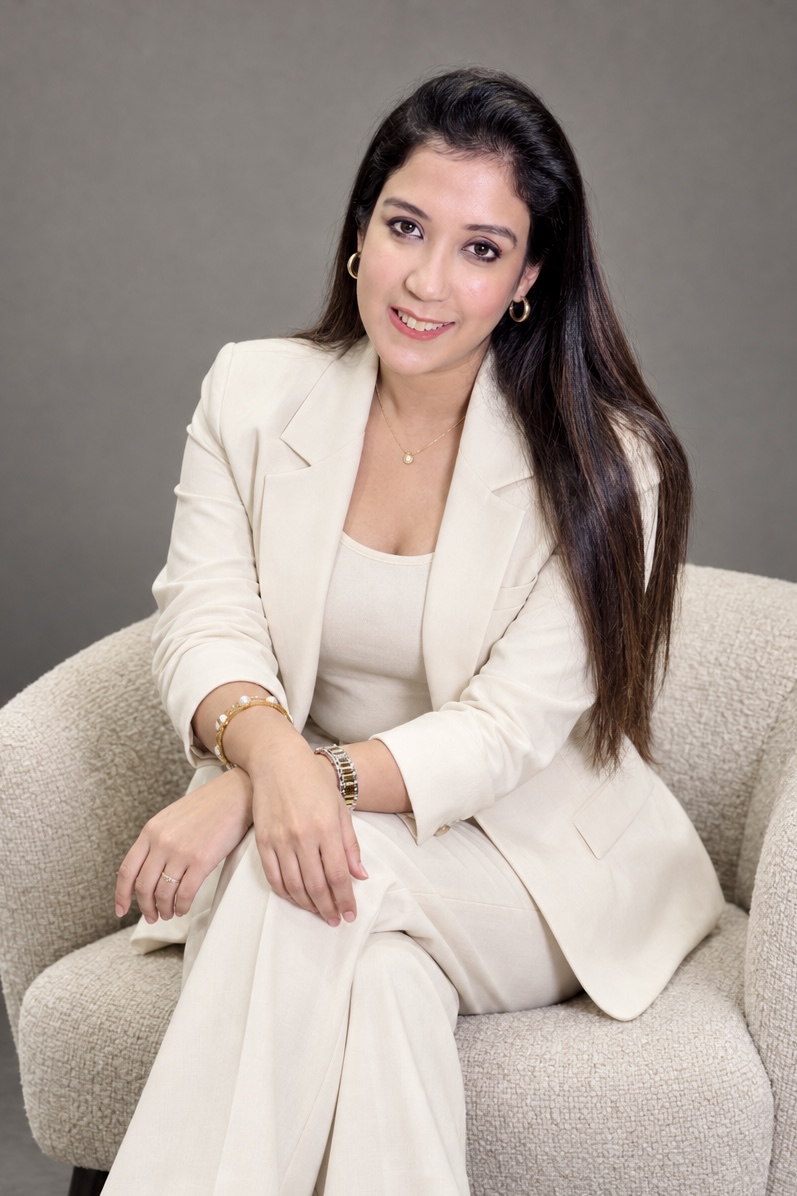
Kolkata founder Rochelle Rozario is turning the invisible work of home management into practical systems that families can follow.
This founder feature was prepared by Feature With Hu9 using information shared by the founder or business and editorially structured for publication.
A nanny does not turn up. One appointment is cancelled. A familiar routine suddenly collapses because the person holding it together is no longer available. For many mothers, these are not isolated inconveniences but signs of a deeper problem: the home’s plans, responsibilities and contingencies often exist largely in one person’s head.
Rochelle Rozario encountered the same pressures after becoming a mother. Her response was to organise them. She created systems for recurring problems such as childcare disruptions, household coordination and routines that otherwise depended on her constant attention. Those systems eventually became Return On Life, a Kolkata-based practical education platform that treats running a home as a skill that can be learned—not an obligation mothers should somehow know how to manage instinctively.
The question behind Return On Life
Rozario describes herself as someone who has always organised messy problems by building systems around them. Motherhood gave her a new set of such problems: unreliable childcare, days that could unravel after a single cancellation, and household routines that lived only in her mind.
She tested her approach within her own nuclear family, where there was no extended support system to fall back on. The result, she says, was a home that ran more calmly. But conversations with other mothers showed her that this experience was far from universal. They repeatedly asked, “How do you manage it all?”
That question exposed the gap on which Return On Life is based. Mothers are expected to run homes, coordinate childcare and protect their families’ routines, yet few are formally taught how to do this work.
Not another lesson in doing more
The platform takes a deliberate position against conventional productivity advice. Its central philosophy is: “You don’t need more discipline. You need systems.”
That distinction matters because the problem, as Rozario frames it, is not that mothers are unwilling to work harder. It is that too many tasks and decisions depend on them personally. Household management, professional responsibilities, childcare and personal wellbeing compete for the same limited time and mental space.
Return On Life therefore focuses on reducing daily decision-making rather than helping mothers fit even more into their schedules. A useful system, in this view, should make responsibilities easier to manage and prevent the entire routine from failing when one plan changes.
Three systems for the work no one teaches
Return On Life’s first offering, ROL: Home Edition, is a self-paced online course built around three areas: home management, reliable childcare and personal wellness. It is designed for working mothers as well as stay-at-home mothers.
The course translates Rozario’s own household practices into repeatable systems. Each system includes a printable worksheet and implementation tools so participants can begin putting it into practice immediately. This practical format is central to the product: Rozario is not presenting a general point of view about maternal wellbeing, but a method for turning household knowledge into routines that do not remain confined to one mother’s head.
The systems were tested in her own home before being taught through the platform. Rozario is herself a toddler’s mother who runs three businesses alongside managing family responsibilities.
Making home management an investible skill
One of Return On Life’s biggest challenges is also what makes its proposition unusual. Rozario says that when mothers are asked what they want to learn, they are likely to name a career skill. Few actively search for a course on running a home, despite the complexity of the work involved.
Most courses in India, she observes, are oriented towards careers. Return On Life instead addresses the home, with a particular focus on working mothers in nuclear families who may be coordinating everything without additional family support.
This means the company has two tasks. It must teach the systems themselves, but it must first help mothers recognise household management as a genuine skill—one worth learning and paying to improve. Creating that category requires changing how the work is understood, not merely marketing another online course.
Growing trust one mother at a time
Return On Life is self-funded and is being developed for a small, focused audience. Rozario characterises its approach as building trust one mother at a time rather than buying broad attention.
The platform has reached and helped more than 100 mothers. Its Home Edition course has also generated paid sales through paid social advertising from the beginning of its advertising campaign. For an offering in a category that mothers may not yet know to search for, these paid purchases provide an initial indication that some are willing to invest in practical help for the mental load of home life.
The progress remains closely tied to a clearly defined problem rather than a mass-market productivity promise: making daily responsibilities less dependent on one overwhelmed person.
From a standard course to personal systems
Home Edition is intended as the first stage of a broader set of offerings. Return On Life is developing one-to-one consultations through which mothers can work directly with Rozario to create systems around their own homes, families and routines.
Guided programmes are also planned for mothers who would prefer to be taken through the process step by step instead of completing a self-paced course alone. A second course is in development as well, shaped by what the first group of mothers has said it needs most.
These plans retain the same underlying idea while allowing for more personal support. Every household has different childcare arrangements, responsibilities and rhythms; the next phase is designed to adapt the platform’s systems to those individual realities.
Return On Life is built around a simple but often overlooked business insight: the work of keeping a home functional is both skilled and teachable. Rozario’s proposition does not promise to remove the demands of motherhood. It aims to stop those demands from residing entirely in one mother’s memory, attention and availability. If the platform can help families replace that dependence with routines they can rely on, it may also give mothers something conventional productivity advice rarely creates—more mental space, not merely a longer list of completed tasks.